01 / 06
Cod first: the dishes built on bacalhau
Salted cod, bacalhau, is the backbone of Portuguese home and tavern cooking, and every region keeps its own version — the country famously counts a recipe for every day of the year. The three dishes below are the ones you are most likely to meet on a first visit. Recipes differ between kitchens, so treat these as the classic shape of each dish rather than a fixed formula.
Bacalhau à Brás
Shredded salt cod folded with matchstick potatoes, onion and softly scrambled egg, finished with black olives and parsley.
- Main ingredients
- Salt cod, potatoes cut into thin straws, onion, egg, olive oil, garlic, parsley and black olives.
- Tastes like
- Soft, savoury comfort food: mellow salty cod and sweet onion bound in silky egg, with potato strands for texture.
- Where and when
- A Lisbon tavern classic that appears on menus across the city and on this side of the river. Suits a relaxed dinner at any time of year.
- Good to know
- Portions are generous and often enough to share. It contains egg throughout, so it is not a dish to order around an egg allergy.
Bacalhau com natas
An oven-baked gratin of layered cod, potatoes and onions under cream.
- Main ingredients
- Salt cod, potatoes, onions, cream, often a little cheese, olive oil, garlic and bay leaf.
- Tastes like
- Creamy, mild and oven-warm — the saltiness of the cod mellowed by cream and baked potato. Homestyle rather than delicate.
- Where and when
- A fixture of homestyle Portuguese restaurant menus everywhere, including Almada and Lisbon. Especially good as a hearty main in cooler months.
- Good to know
- Richer than it looks; a simple salad alongside balances it. Ask whether the kitchen’s version contains cheese if that matters to you.
Pastéis de bacalhau
Small cod fritters — crisp outside, fluffy within — also called bolinhos de bacalhau.
- Main ingredients
- Salt cod, mashed potato, egg, onion and parsley, deep-fried until golden.
- Tastes like
- Crisp at the shell, then light and savoury inside, with genuine cod flavour rather than fishiness.
- Where and when
- Café counters, tasca starters and petiscos menus everywhere. Eaten hot or at room temperature, at any time of day.
- Good to know
- Usually sold by the piece, which makes them an easy snack with a beer or a coffee. Best when freshly fried.
02 / 06
From the sea
Between the Atlantic and the Tagus, fish and shellfish sit at the centre of the table. What is available changes with the season and the day’s catch, so it is normal to ask what came in fresh rather than ordering from a fixed list.
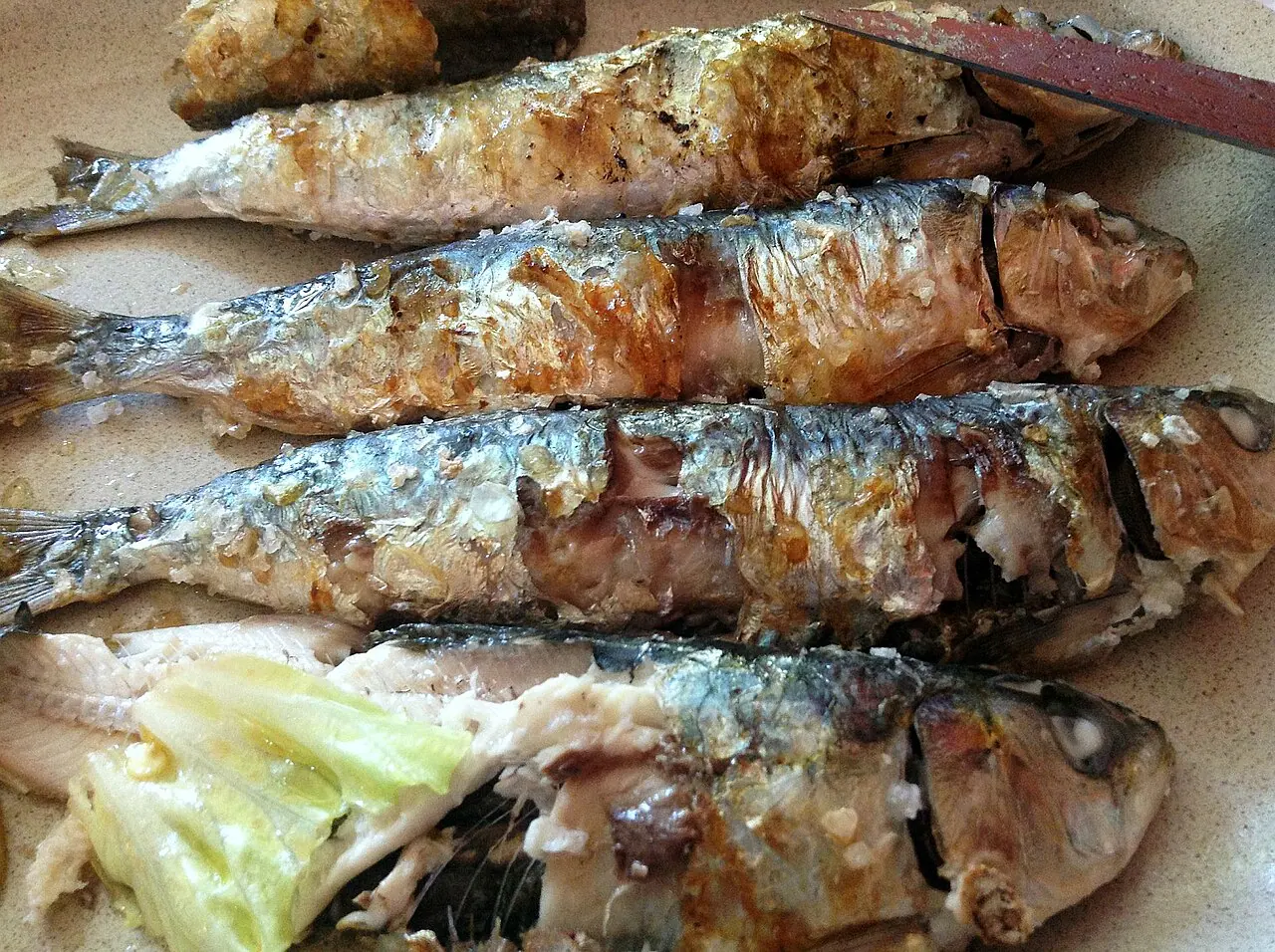
Sardinhas assadas
Whole fresh sardines grilled simply over charcoal and served with bread, salad or roasted peppers.
- Main ingredients
- Fresh sardines, coarse salt and charcoal — occasionally a squeeze of lemon. Little else, by design.
- Tastes like
- Smoky, oily and intensely savoury; the skin crisps while the flesh stays succulent. A taste of the Portuguese summer.
- Where and when
- Grilled-fish restaurants and street barbecues, at their peak around the popular saints’ festivals in June. Availability follows the season.
- Good to know
- Eaten with the hands and unapologetically messy, with soft bones. The grills announce themselves by smell — follow it.
Amêijoas à Bulhão Pato
Clams opened in garlic, olive oil, white wine and coriander, named for a Portuguese poet.
- Main ingredients
- Clams, plenty of garlic, olive oil, white wine, fresh coriander, lemon and black pepper.
- Tastes like
- Briny, garlicky and bright; the broth is the best part, made for mopping up with bread.
- Where and when
- A classic starter on seafood and petiscos menus around Lisbon and the south bank. Best ordered early in the meal.
- Good to know
- Order bread with it without hesitation — the sauce is the point. Eat them while the clams are still hot.
Arroz de marisco
A soupy seafood rice — closer to a rich broth with rice than to a dry, paella-style dish.
- Main ingredients
- Rice, prawns, clams, mussels and sometimes crab, cooked with tomato, onion, garlic, white wine and coriander.
- Tastes like
- Deeply savoury and briny: sweet shellfish, tomato and a broth you eat with a spoon.
- Where and when
- Seafood restaurants and marisqueiras along the coast and riverfront. Traditionally served for the table rather than one plate.
- Good to know
- It arrives wet, almost like a stew, with shells to work through — take your time and order for at least two.
Cataplana de marisco
Seafood steamed in its own aromatics inside a hinged copper pan, brought to the table still closed.
- Main ingredients
- Clams, prawns and pieces of fish with tomato, onion, green pepper, white wine and olive oil; often a slice of chouriço.
- Tastes like
- Aromatic and gently spiced: shellfish steam mingles with tomato and, where used, a faint smokiness from the sausage.
- Where and when
- The cataplana is an Algarve specialty, but restaurants around Lisbon and Almada with broader Portuguese menus often serve it.
- Good to know
- Part of the pleasure is the theatrical opening at the table. Ask which shellfish is in the day’s version before ordering.
Polvo à Lagareiro
Tender octopus with smashed “punched” potatoes, generously dressed in olive oil, garlic and parsley.
- Main ingredients
- Octopus, batatas a murro (potatoes pressed until they split), abundant olive oil, garlic, onion and parsley.
- Tastes like
- Meltingly soft octopus with fruity olive oil and creamy, crisp-edged potatoes. Luxurious without being heavy.
- Where and when
- A main course on traditional and coastal restaurant menus, common at festive times of year.
- Good to know
- The pool of olive oil is intentional, not a mistake. Order it as a proper main and expect a substantial plate.
03 / 06
Quick bites at the counter
Some of the best Portuguese eating happens standing up, at a counter, with a coffee or a small beer. These are the everyday snacks and sandwiches you can try almost anywhere, at almost any hour.
Bifana
A sandwich of marinated pork in a crusty roll — a Portuguese working-day institution.
- Main ingredients
- Thin pork, traditionally marinated in garlic, paprika or white pepper and white wine, served in a bread roll.
- Tastes like
- Juicy, garlicky and gently peppery; Lisbon-style bifanas sit in a little savoury sauce.
- Where and when
- Cafés, snack bars and counter institutions from morning to night, including around Almada’s markets and streets.
- Good to know
- Heat varies from house to house — mustard and hot sauce are usually on the counter. Cheap, fast and filling.
Prego no pão
A simple steak sandwich — thin beef, garlic and butter pressed into a fresh roll.
- Main ingredients
- Beef steak, garlic, butter or olive oil, salt and a crusty roll; mustard is a common addition.
- Tastes like
- Direct and satisfying: beefy, garlicky and buttery, with the bread soaking up the juices.
- Where and when
- Cafés, grills and steakhouses at lunch, and famously as the closing course of a long meal.
- Good to know
- Quality varies more than the price suggests — a good prego is about the meat, not the toppings. Ask for mustard if you like heat.
Rissóis de camarão
Half-moon pastries filled with creamy shrimp, breaded and fried.
- Main ingredients
- Shrimp in a seasoned béchamel with onion, sealed in dough, coated in breadcrumbs and fried.
- Tastes like
- Crisp crumb giving way to a soft, creamy, shrimp-scented centre.
- Where and when
- Café and takeaway counters everywhere, party tables and family occasions; a snack for any hour.
- Good to know
- Best eaten fresh and hot. Sold individually, so it is easy to try one without committing to a meal.
Croquetes
Small fried croquettes of seasoned minced meat — the default snack at any counter.
- Main ingredients
- Minced beef in a silky béchamel with onion and a hint of nutmeg, breaded and fried.
- Tastes like
- Savoury and creamy inside, with a thin, crackly crust. Comforting and moreish.
- Where and when
- Pastelarias, cafés and snack counters across the country, from morning coffee to evening drinks.
- Good to know
- Sizes vary by region and by house. One is never quite enough; two with a coffee is the classic order.
Caldo verde
The Portuguese comfort soup: silky potato broth with finely sliced greens and a slice of chouriço.
- Main ingredients
- Potatoes, thinly shredded couve (a collard-type green), chouriço sausage, olive oil, garlic and salt.
- Tastes like
- Gentle and restorative: earthy greens and creamy potato, with smoky sausage stirred through.
- Where and when
- On menus everywhere — restaurants, cafés and festivals — in any season, and especially welcome on cool evenings.
- Good to know
- Traditionally the greens are cut almost translucently thin. The chouriço is what makes it caldo verde; meat-free versions exist but are not the classic.
04 / 06
Slow, hearty cooking
When the weather cools or lunch is the main event of the day, Portuguese cooking turns to stews and boiled dinners — generous, one-pot meals with deep roots in home kitchens.
Cozido à Portuguesa
A grand boiled dinner of meats, smoked sausages and vegetables, served in courses from one pot.
- Main ingredients
- Beef, pork and chicken with chouriço, morcela and farinheira sausages, plus cabbage, potatoes, carrots, turnips, beans and rice or pasta.
- Tastes like
- Deep, homely and smoky: every element tastes of the pot, and the sausages perfume everything else.
- Where and when
- Traditional restaurants, usually at lunch and often on particular days of the week; a cold-weather ritual.
- Good to know
- It is enormous — pace yourself, or share. Ask on which days the kitchen makes it before planning a visit.
Feijoada
A thick bean stew loaded with pork and sausages; the Portuguese version is its own dish, distinct from Brazil’s.
- Main ingredients
- Beans with assorted pork cuts, chouriço, onion, garlic and bay; recipes vary widely by household and region.
- Tastes like
- Rich, smoky and deeply savoury — slow-cooked beans that carry the flavour of the pork.
- Where and when
- Traditional restaurant lunches, especially midweek, across Portugal including the Almada area.
- Good to know
- If you know the Brazilian feijoada, expect something different: Portuguese versions vary greatly, so ask what the kitchen serves.
Francesinha
A layered hot sandwich of steak, sausage, ham and cheese under a beer-and-cheese sauce — originally from Porto, not Lisbon or Almada.
- Main ingredients
- Bread, beef steak, fresh sausage, ham, melted cheese, often a fried egg, and a spicy sauce built on beer and cheese.
- Tastes like
- Unapologetically rich: salty, slightly spicy and saucy — somewhere between a sandwich and a stew.
- Where and when
- A Porto institution. You will see it on some menus around Lisbon and Almada, but it is not a local tradition here.
- Good to know
- If francesinha matters to you, plan to try it in Porto, where the recipes are most faithful — and treat versions elsewhere as imitations, asking what the kitchen actually serves.
05 / 06
Desserts and bakery
Portugal’s pastries and desserts come from a long tradition of convent and monastery baking, and they are part of the day rather than an afterthought. Every neighbourhood pastelaria is worth stepping into.
Pastéis de nata
The Portuguese custard tart: blistered, caramelised top, shatteringly flaky pastry.
- Main ingredients
- Egg custard with sugar, lemon and sometimes cinnamon, baked in rough puff pastry until the top spots char.
- Tastes like
- Warm, creamy and softly set inside, with crisp, faintly bitter caramelised layers outside.
- Where and when
- Every pastelaria and café, all day long. The classic pairing is an espresso at the counter.
- Good to know
- Best within hours of baking, ideally still warm; cinnamon on top is optional and traditional. One is rarely enough.
Bolo de arroz
A small, light muffin made with rice flour and lemon zest, baked in a fluted paper case.
- Main ingredients
- Rice flour, eggs, sugar, butter and lemon zest.
- Tastes like
- Light and slightly grainy in the nicest way, gently sweet and citrusy.
- Where and when
- Pastelarias everywhere, displayed beside the natas; a natural partner to morning coffee.
- Good to know
- A good pick when you want something less rich than cream-filled pastries. Best on the day it is baked.
Pão de Deus
“Bread of God”: a soft, brioche-like bun with a sweet coconut or sugared top, a traditional morning treat.
- Main ingredients
- Enriched wheat dough with eggs and butter, topped with sugar and often coconut flakes.
- Tastes like
- Pillowy and milky, lightly sweet, with a faintly crisp, aromatic top.
- Where and when
- Bakeries in the morning — it is a breakfast tradition and sells out early.
- Good to know
- Buy it fresh in the morning rather than expecting it in the afternoon. Split and filled versions exist too.
Queijadas
Small, intensely sweet individual pastries, often made with fresh cheese, with regional versions across Portugal.
- Main ingredients
- Fresh cheese (requeijão) or egg and sugar in a crisp pastry cup; recipes change from region to region.
- Tastes like
- Sweet, milky and eggy, with a chewy-creamy centre against crisp pastry.
- Where and when
- Pastelarias everywhere; the queijadas of Sintra are the most famous, but every area keeps its own style.
- Good to know
- They are small, which makes it easy to try one of each version you come across. Ask which style the shop sells.
Arroz doce
Portuguese rice pudding, made creamy with milk and egg yolk and marked with a cinnamon lattice.
- Main ingredients
- Rice cooked in milk with sugar, lemon peel and egg yolk, dusted with ground cinnamon in patterns.
- Tastes like
- Cool, creamy and delicately sweet, with lemon brightness under the cinnamon.
- Where and when
- Home cooking, traditional restaurants and conventual-style sweet shops; often at festivals and family tables.
- Good to know
- Served chilled or at room temperature. A neat cinnamon pattern is the sign of a kitchen that cares.
“One cannot think well, love well, sleep well, if one has not dined well.”
06 / 06
Where to try Portuguese food in Almada and Cacilhas
Almada and Cacilhas are good places to eat Portuguese food the way locals do: neighbourhood tascas, grilled-fish restaurants and café counters rather than showpiece dining rooms. Menus, dishes and hours change often, so check current menus and opening times locally — with the restaurant itself, or on the spot — before planning a meal around one. Trust the places with a short menu, a chalkboard of daily dishes and a room full of Portuguese voices, and treat menus with printed photos more cautiously. We do not rank or review individual restaurants, and we recommend confirming everything on the day.
Before you go
Check live ferry, bus, opening and access information before setting out. Services, timetables and access arrangements change, and official providers are the only reliable source.